How to Play FibDefense
Tower defense reimagined around mathematics. Every shot, every kill, every strategy is governed by the Fibonacci sequence.
The Exact-Kill Rule
A hit lands when its damage is equal to or smaller than the monster's remaining HP. Chain your Fibonacci towers so their shots sum precisely to each enemy's HP, leaving nothing left over.
See It In Action
A tower can fire while its damage fits the remaining HP. An equal hit is the exact finish; a larger hit is skipped. Your job is building the right sequence so HP reaches zero.
✅ Good sequence — HP: 8
❌ Wrong tower — HP: 8
✅ Good sequence — HP: 13
The Eight Tower Tiers
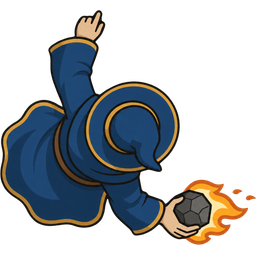
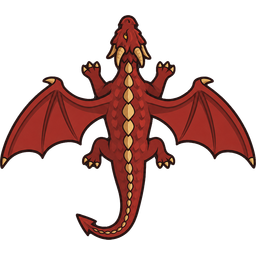
Each tier deals exactly its Fibonacci number in damage. Names below are from the Fantasy theme — every theme has its own tower designs.


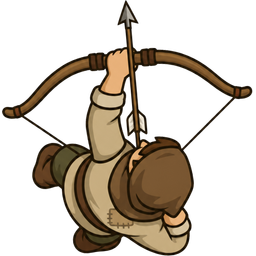
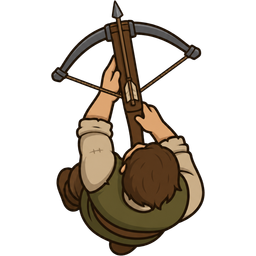
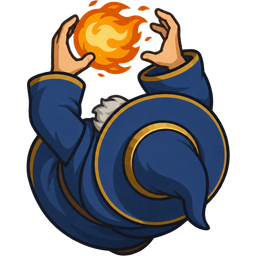
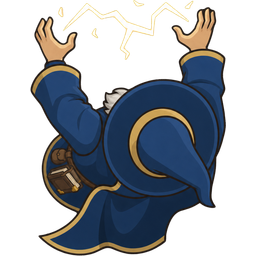
The Fibonacci Engine
Every tower deals a Fibonacci number of damage — 1, 2, 3, 5, 8, 13, 21, 34 — and never overkills. To defeat an enemy, your towers' hits have to add up to its exact HP.
The Fibonacci numbers form a complete sequence — every whole number is reachable as a sum of them — and because your smallest tower deals exactly 1 damage, every enemy's HP is always solvable. Usually there are many ways to do it, and the toughest enemies need repeated hits from your strongest towers, so the real puzzle is finding an efficient solution.
Worked Examples
One tidy way to hit each total — in-game you can reach the same HP other ways too.
Game Modes
Four modes, each demanding a different Fibonacci strategy.
Classic
20 hand-crafted waves. Campaign ends when you beat wave 20 or run out of lives.
Boss appears every 10th wave — 3× HP, 0.8× speed.
Puzzle
34 hand-crafted, deterministic levels — a fixed gold budget, known waves, no creep rewards, and Zeckendorf-strict math: each damage value may hit a creep only once (splash still deals full damage in the blast). Clear with zero leaks, at or under par, without moving a tower for all 5 stars. Every level is verified solvable.
First 8 levels are free on the free themes — try before you unlock.
Continuous
No wave boundaries. Monsters spawn non-stop and grow stronger over time.
Every 100 kills triggers a boss — 10× HP, 0.7× speed, 10× reward.
Endless
Waves continue past wave 20, procedurally generated forever.
Boss appears every 10th wave — 3× HP, 0.8× speed.
Boss Encounters
Bosses have massive HP that requires long Fibonacci chains across your full path. How they appear depends on your mode.
Appears at every 10th wave. Boss has 3× the HP of that wave's creeps and moves at 0.8× speed.
Triggered every 100 kills. Boss has 10× HP at 0.7× speed — and pays 10× the reward.
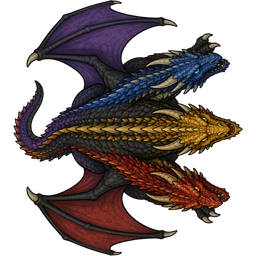
Boss HP is always a valid Fibonacci sum — there's always a solution, but finding it under pressure is the challenge.
Difficulty Levels
Choose your challenge. Relaxed and Normal are free; Hard, Expert, and Zeckendorf unlock with premium.
🌀 Zeckendorf is the strict-math tier: each Fibonacci value may hit a creep only once, so every kill is a sum of distinct numbers. Creep HP is capped so every enemy stays killable — but only with perfect precision. 55 lives to prove it.
Strategy Tips
Plan your path layout before placing towers. Once a tower is down, rearranging costs resources.
Think of each enemy's HP as a Fibonacci sum to solve. Write it out if you need to.
Higher-tier towers don't replace lower ones — you need both. A Tier-8 tower (34 dmg) can't handle a HP:3 enemy.
Long-press a placed tower to sell it for 75% back, or move it to adjust your firing order.
You earn bonus gold at the end of each wave — save it for higher-tier towers as HP values climb.
Bosses require full-path coverage. Make sure every Fibonacci tier is represented somewhere on the route.
Ready to Test Your Math?
Download FibDefense and start with Relaxed mode — free forever.